
Skip to content

For Sustainability, Plastic Often Beats Glass

Ask most consumers whether a glass bottle or plastic one is more sustainable, and they’ll tell you that glass wins, almost by default. Glass is natural, infinitely recyclable, and free of the associations that have made plastic a symbol of environmental harm. While those are good qualities, they don’t consider the full life cycle.

When you take production energy, transport weight, and end-of-life infrastructure into account, glass doesn’t always come out ahead. In a growing number of applications, the data points the other way.
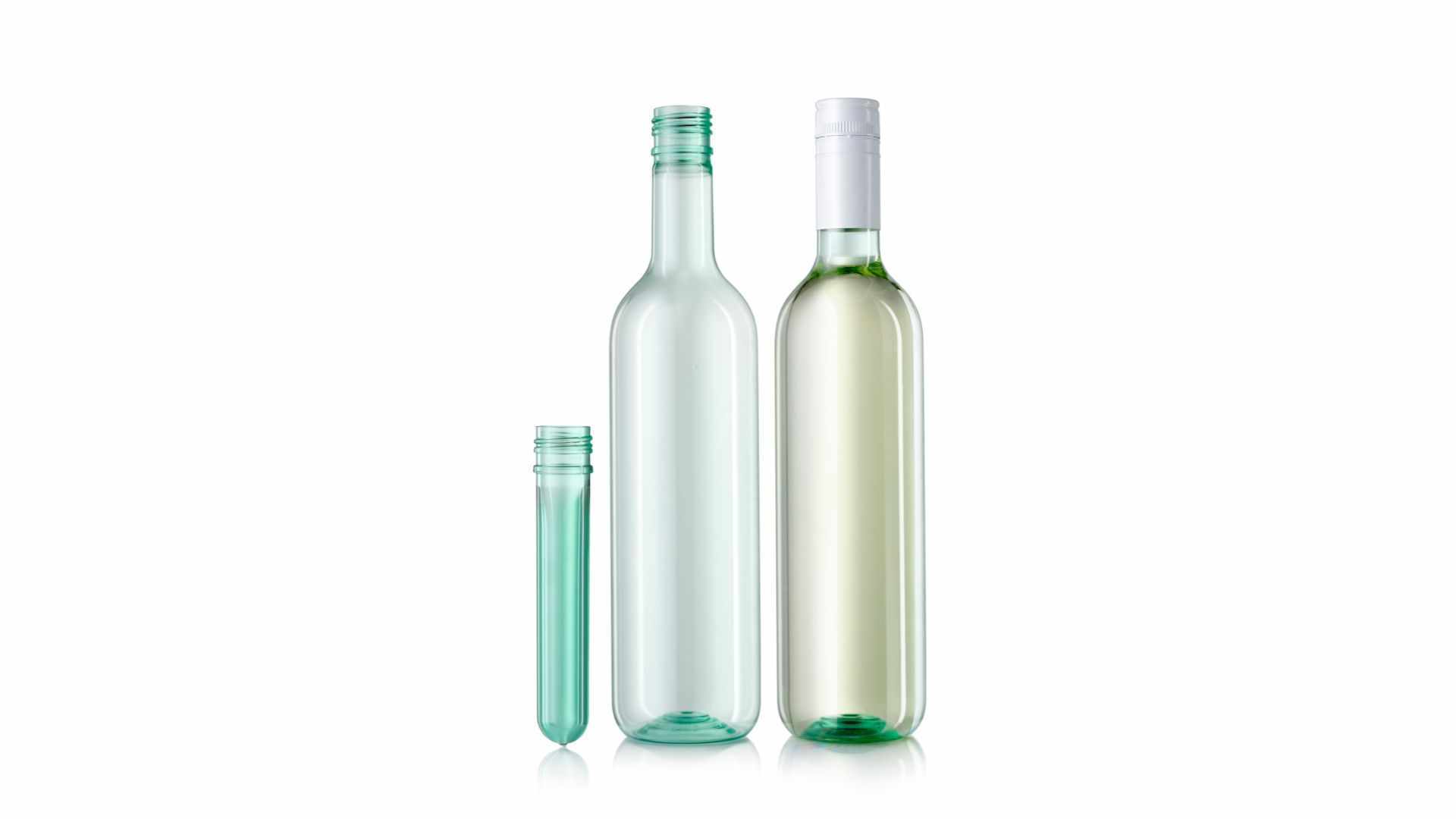
Why the Weight of Glass Makes a Difference

The assumption that glass is more sustainable is based on an incomplete picture. It’s true that glass can be recycled indefinitely without degrading in quality. But that doesn’t consider everything that happens before a bottle reaches the recycling bin. It takes energy and fuel to produce and transport glass. Emissions are generated at every stage between the factory and the consumer’s hand.

A life cycle assessment (LCA) by Ecochain found that, while the environmental impact per kilogram of glass can look favorable in isolation, weight transforms the comparison once transportation is factored in. A glass bottle can be up to 40 times heavier than a comparable polyethylene terephthalate (PET) bottle. When you add up that weight difference across millions of units, the cumulative energy cost of transporting glass easily surpasses that of plastic.

What the Research Shows

The glass versus plastic question has been examined extensively in peer-reviewed research, and the results have been consistent.

NAPCOR partnered with Franklin Associates to produce a 2023 Life Cycle Assessment of beverage containers that examined PET plastic against glass and aluminum across the full life cycle. They evaluated energy consumption, greenhouse gas emissions, water consumption, acid rain potential, smog, and eutrophication potential. The conclusion was that PET delivered significant environmental savings over both alternatives.

A peer-reviewed study published in ScienceDirect on PET versus returnable glass bottles for carbonated beverages reached a similar finding. A 500 mL PET bottle had lower environmental impacts than a 250 mL returnable glass bottle across the life cycle stages examined. Even when evaluating returnable glass bottles that are designed to be collected, cleaned, and reused multiple times, PET still outperformed them.

Despite the data, there’s a persistent public perception problem. A review of 53 peer-reviewed life cycle assessment (LCA) studies published between 2019 and 2023 by the Plastics Research Council found that consumer perceptions regularly diverge from LCA findings and that, when the full life cycle is accounted for, plastic packaging often outperforms alternatives. Because LCA findings are based on specific conditions, they should always be interpreted in context.

The Honest Limits of the Comparison

None of this means plastic wins by default in every context. The sustainability outcome of any packaging decision depends on the specific market it’s operating in, the recycling infrastructure available, the distances involved in distribution, and the end-of-life pathways that are realistically accessible to consumers.

A glass bottle in a region with a well-functioning deposit return system and local reuse infrastructure will perform differently than one shipped across continents.

The case for thoughtfully designed plastic isn’t that it always outperforms glass. The case is that the data should drive the decision. In a large proportion of real-world applications, the data favors plastic over the intuition that glass is automatically the more responsible choice.

From Theory to Bottle

The PET wine bottle ALPLA developed with German startup weinton | WNTN is proof that strong life cycle performance and commercial viability can exist in the same package.

The core of the innovation is an ultra-thin silicon oxide layer applied to the inside of the bottle through a plasma-assisted coating process. Gaseous silicon oxide is deposited as an invisible, glass-like layer on the inner wall of the PET bottle. The barrier, only a few nanometres thick, prevents the exchange of oxygen and carbon dioxide, protecting the aroma and quality of the wine without impairing the recyclability of the material. The bottle is fully recyclable and can be returned to standard deposit machines throughout Germany. For the first time, wine is part of the established German deposit system.

Jörg Krick, co-founder of weinton | WNTN, says, “We have the best closed-loop system in the world in this country. It’s time for the wine trade to become part of it.”

At 50 grams, the bottle is much lighter than a standard glass wine bottle that weighs 450 grams, resulting in 49% life cycle carbon dioxide (CO₂) savings.

The Decision That Should Drive the Transition

The glass versus plastic debate can only be settled by evidence. When you measure the full environmental cost from production through transport to end-of-life, plastic outperforms glass in a significant majority of real-world applications.

Manufacturing energy, transport weight, and end-of-life infrastructure all factor into a product’s true environmental cost. The familiar assumptions about glass don’t always hold up to that level of scrutiny. ALPLA’s PET wine bottle is one example of what a data-driven material decision looks like in practice.

The sustainability case is already in the data. The work now is making sure material choices reflect it.

Leave a Comment