

From Warning Signs to Circular Systems: A Brief History of Plastic Sustainability
Published: October 12, 2026
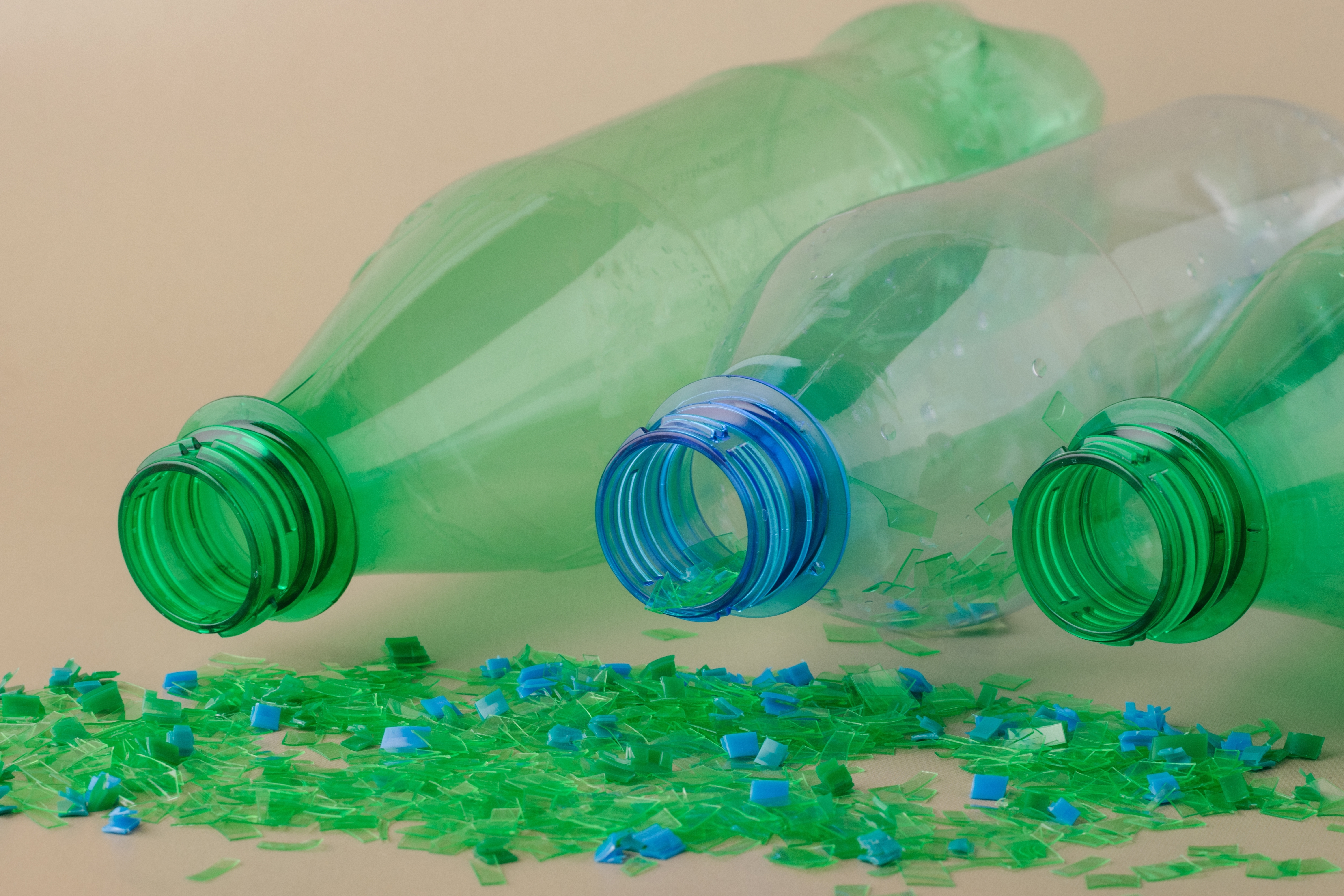
Early plastics were celebrated for their ability to make products lighter, more durable, and more accessible. Some even reduced demand for scarce and ethically questionable natural materials such as ivory and tortoiseshell. Over time, plastic became essential to industries ranging from food and healthcare to transportation and construction.
As production grew, another side of the story became harder to ignore. Plastic waste accumulated in landfills and waterways and recycling systems struggled to keep up with consumption. Researchers began finding plastic debris in places far from where it was originally used.
The sustainability conversation that followed has evolved dramatically over the past several decades. Today, attention increasingly centers on circular systems, better recycling infrastructure, recycled content, lifecycle measurement, and policies that consider what happens to packaging after use. That history helps explain both the challenges the industry faces today and the progress already underway.
The Early Years of Plastic Innovation
The earliest plastics emerged partly in response to limits on natural resources. In the 19th century, inventors searched for substitutes for materials such as ivory, which was widely used in products including billiard balls. Early synthetic and semi-synthetic materials offered manufacturers new options that could be produced without relying on animal-derived resources. The Science History Institute notes that celluloid was promoted as a way to reduce dependence on elephant ivory and tortoiseshell.
The pace of innovation accelerated during the first half of the 20th century. Bakelite arrived in the early 1900s, followed over the next several decades by materials including nylon, polyester, polyethylene, polyethylene terephthalate (PET), and high-density polyethylene (HDPE). Plastics could reduce weight, resist corrosion, prevent breakage, and make products more affordable.
ALPLA was founded in Austria in 1955 during this period of rapid materials innovation. Its early history followed the broader development of plastic packaging, although sustainability would become a much larger part of the company’s story decades later.
The 1960s and 1970s Bring Early Warning Signs
As plastic became more common, researchers began documenting its persistence in the environment. Studies in the late 1960s and early 1970s reported plastic debris in oceans and wildlife interactions with discarded material. Researchers documented plastic ingestion by seabirds, entanglement of marine mammals, and plastic pellets floating in the North Atlantic. These studies provided some of the earliest scientific evidence that plastic waste could travel widely and remain in ecosystems for long periods.
Environmental awareness was growing more broadly at the same time. The first Earth Day took place in 1970, and the familiar Möbius loop, or chasing arrows, recycling symbol appeared that year as well.
Recycling infrastructure, however, was still in its infancy. The first U.S. plastic recycling mill opened in Pennsylvania in 1972. These early facilities helped establish methods that would later support larger municipal recycling programs.
In 973, DuPont engineer Nathaniel Wyeth patented the process for making polyethylene terephthalate (PET) bottles. This solved the longstanding challenge of creating a plastic container that could withstand carbonation pressure without exploding. PET became foundational to plastic sustainability because it is one of the most widely recycled polymers in the world, and its light weight relative to glass substantially reduces transport emissions.
The challenge was beginning to take shape. Plastic offered clear functional benefits, while the systems required to recover material after use remained underdeveloped.
The 1980s Put Recycling on the Public Agenda
Recycling became considerably more visible during the 1980s. Woodbury, New Jersey, introduced one of the first curbside recycling programs in the U.S. in 1980. Other communities gradually followed. The plastics industry also became more involved in promoting municipal collection and recycling as concerns about solid waste increased.
The introduction of the Resin Identification Code in 1988 gave consumers, municipalities, and recyclers a standardized way to distinguish common types of plastic. The numbered symbols still found on packaging today helped sorting systems identify materials such as PET and HDPE.
In 1988, Plastipak founded Clean Tech, Inc., one of the first dedicated plastic recycling centers in the U.S., to process HDPE and PET bottles that would otherwise go to landfill. By 1989, Clean Tech had launched manufacturing operations including sorting, grinding, and an advanced HDPE wash-and-pelletize system.
Infrastructure continued expanding, but collection alone couldn't solve every challenge. Recycling depended on sorting technology, reliable end markets, appropriate product design, consumer participation, and enough processing capacity to turn collected material into usable feedstock.
Those interconnected requirements would become more important as plastic production and consumption expanded worldwide.
The 1990s Make Plastic Pollution a Global Conversation
During the 1990s, globalization transformed manufacturing and consumer markets. Plastic packaging traveled with that growth because its light weight, durability, and versatility made it highly useful for distributing goods across the globe.
Waste management systems didn’t develop uniformly across regions. Some countries built extensive collection and recycling networks, while others lacked the infrastructure needed to manage rapidly growing material flows.
Ocean pollution also drew more attention. Reports of large accumulations of marine debris in the North Pacific helped make the consequences of inadequate waste management easier for the public to visualize. By the end of the decade, plastic pollution had become an international environmental concern rather than a collection of isolated local issues.
The emerging question focused on systems. If plastic was going to remain an important material, how could economies capture more of it after use and return that material to productive applications?
At the same time, producers started finding practical uses for recycled plastic. In 1991, Coca-Cola became the first company to put a carbonated soft drink in direct food contact with recycled plastic, when recycled-content PET bottles hit store shelves in Charlotte, North Carolina. The technology was developed with Hoechst Celanese, which supplied resin regenerated through a chemical depolymerization process with 25% post-consumer recycled content. Pepsi followed approximately eight months later in Sacramento.
The 2000s Shift the Conversation Toward Action
The 2000s brought a noticeable change in how governments, researchers, and manufacturers approached plastic waste.
Governments began experimenting with policies aimed at reducing specific forms of plastic waste. Bangladesh restricted lightweight plastic bags in 2002 after discarded bags contributed to drainage problems during flooding. San Francisco adopted a plastic bag restriction in 2007. Meanwhile, marine biologist Richard Thompson and colleagues introduced the term “microplastics” in 2004, giving researchers a common vocabulary for studying very small plastic particles in the environment.
Manufacturers also began investing more directly in circular systems. For ALPLA, a significant milestone came in 2005 when the company entered the recycling sector with its first recycling facility in Austria. That decision connected packaging production more directly with the recovery and reprocessing of used plastic. Recycling would grow into an important part of the company’s sustainability strategy in the decades that followed.
Manufacturer involvement is key because circularity requires more than collecting packaging. Manufacturers need high-quality recycled material that can reliably return to production. Investments in washing, sorting, processing, and recycled resin production help build that bridge.
The 2010s Bring Circularity Into Business Strategy
By the 2010s, the sustainability conversation had expanded from managing waste toward redesigning entire material systems. The concept of the circular economy picked up steam. Instead of assuming materials would move from production to use to disposal, circular models seek to keep resources circulating through reuse, recycling, repair, and other recovery strategies.
Industry commitments evolved to embrace the concept. The Ellen MacArthur Foundation helped bring companies, governments, and other organizations around shared circular economy goals during the decade. Policy was moving as well. The European Commission proposed its Single-Use Plastics Directive in 2018, and the measure entered into force in 2019.
ALPLA’s sustainability initiatives also expanded during this period. In 2015, the company launched its Zero Pellet Loss program to prevent plastic pellets used during manufacturing from escaping into the environment. In 2018, ALPLA partnered with Austrian mineral water producer Vöslauer on a bottle made with 100 percent recycled PET, demonstrating how high levels of recycled content could work at commercial scale.
The industry also made advances in addressing materials that are hard to recycle. Eastman Chemical began commercial-scale operation of its Carbon Renewal Technology in October 2019 at its Kingsport, Tennessee plant, marking a major milestone in chemical (molecular) recycling of hard-to-recycle mixed plastics.
These developments are part of manufacturers’ growing understanding that they could influence environmental outcomes at several stages, including material selection, production, packaging design, recovery, and recycled-content use.
The 2020s Turn Circularity Into an Operating Requirement
Regulation is turning voluntary sustainability commitments into requirements. Seven U.S. states have enacted extended producer responsibility laws covering packaging and paper products. While the details differ by state, these programs generally shift more responsibility for collection and recycling costs toward producers.
Europe has moved further toward a harmonized regulatory framework. The EU Packaging and Packaging Waste Regulation entered into force in February 2025 and began applying in August 2026. Among its long-term measures are recyclability requirements and minimum recycled-content requirements for plastic packaging beginning in 2030.
Data is central to meeting these objectives. Lifecycle assessments and product carbon footprint calculations give companies more detailed information about the environmental impacts associated with materials and manufacturing processes. Facility-level studies can account for factors such as local energy sources, processing efficiency, and recycled feedstock, helping companies move beyond broad assumptions when evaluating packaging.
ALPLA often combines its recycling investments with these types of measurements. The company has published independently assessed carbon footprint data for recycled materials from facilities in several countries, providing more specific evidence of how recycling can reduce emissions associated with material production. The company has also continued investing in recycling capacity and packaging designed around recycled and renewable feedstocks.
Recycling capacity determines whether material can return to production, while measurement helps companies understand whether their strategies are producing meaningful environmental gains.
The Next Chapter of Plastic Sustainability
Plastic’s environmental history doesn’t follow a simple trajectory. The same qualities that made the material valuable, including durability, low weight, affordability, and resistance to moisture, also created challenges when products escaped collection systems or lacked viable end-of-life pathways.
Decades of experience have made the requirements for a more sustainable system clearer:
- Packaging design needs to consider recyclability from the beginning.
- Collection and sorting systems need enough reach and consistency to recover useful material. Recyclers need reliable demand for the resins they produce.
- Manufacturers and brands need credible environmental data to guide material decisions.
- Policymakers need approaches that support circularity while accounting for the full lifecycle impacts of packaging choices.
Progress is visible in each of those areas, although significant work remains. The biggest change may be the way the industry now thinks about responsibility. Sustainability now extends across the entire material lifecycle, from design and production through collection, recycling, and use of secondary raw materials.
That evolution took decades. Plastic began as an innovative answer to material limitations, became an environmental challenge as consumption outpaced recovery systems, and is now at the center of an effort to build something more circular.
The story is still being written.