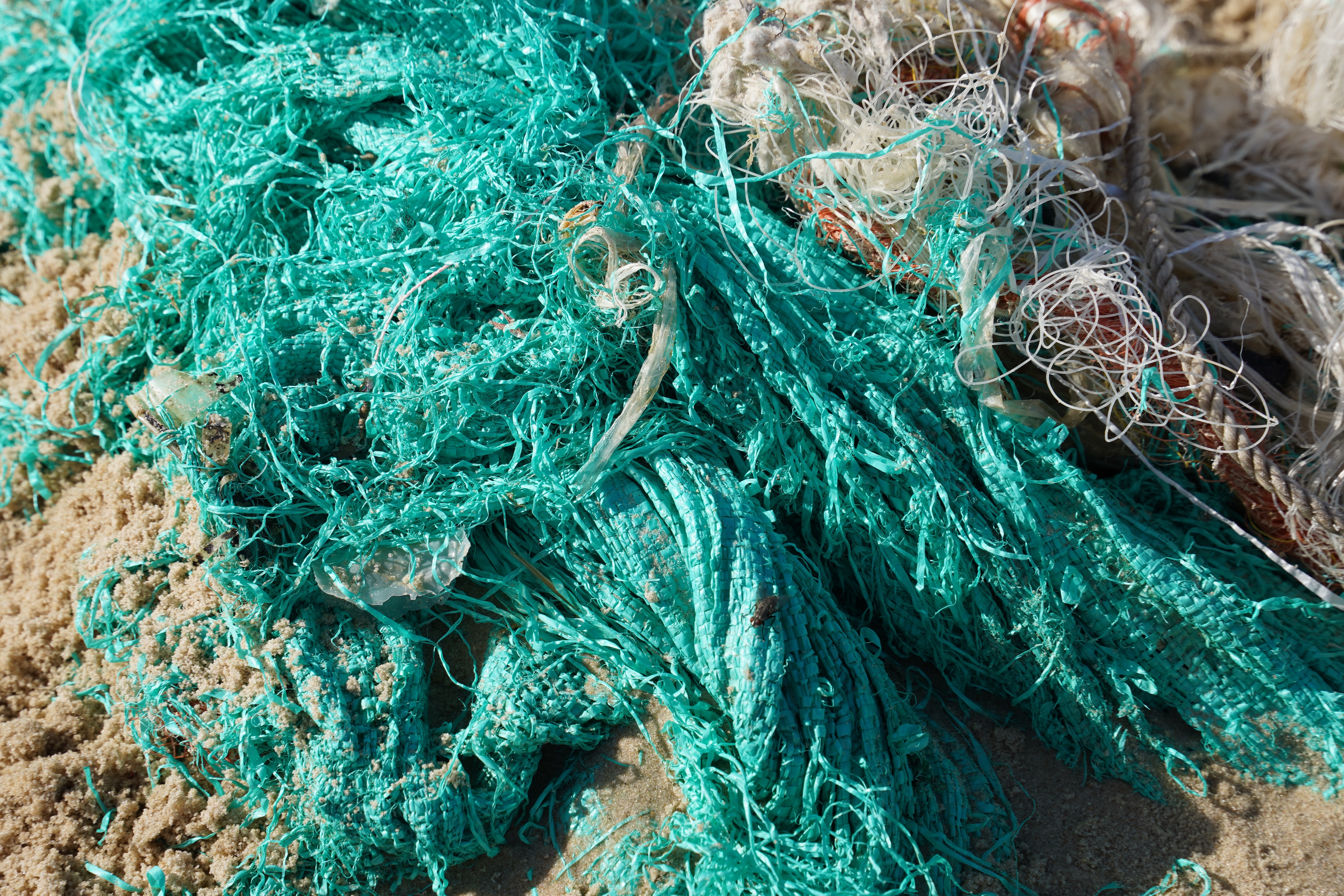
Between 75% and 86% of the floating plastic in the Great Pacific Garbage Patch comes from lost or abandoned fishing gear. Ghost nets, which are fishing equipment left or lost at sea, drift through ocean currents for decades, entangling marine life, degrading into microplastics, and accumulating in massive, largely invisible concentrations far from any coastline. Every year, an estimated 8.8 million tonnes of plastic enter the world’s oceans, and most of it stays there.
A growing number of companies recognize that this waste can be a raw material. They’re treating it as a feedstock to recover, and they’re making products like athletic shoes, industrial packaging, eyewear, fiber, and more. Collectively, they’re building a case for recovered plastic as a key element of the circular economy. Here are examples of how ocean plastic can become a scalable source of recycled material.