
Bio-Based Plastics: What They Are and Why They Matter
Published: July 29, 2026 Updated: July 29, 2026
Walk through any grocery store or pharmacy today and you’ll see packaging with labels like “bio-based,” “biodegradable,” and “compostable.” Sometimes those terms are used on the same product, and sometimes they’re used interchangeably. These terms actually describe distinct properties that have no necessary relationship to one another, and conflating them has become one of the most common sources of confusion and greenwashing in sustainable packaging.
Getting the vocabulary right is the foundation for making sound material decisions, evaluating credible claims, and understanding where bio-based plastics genuinely fit in the broader effort to build a more circular plastics economy.
Three Terms That Mean Three Different Things
The confusion begins with the assumption that plastics derived from natural, biological sources must break down naturally. That assumption is incorrect. Here’s what each term means.
Bio-based plastics are plastics that are partially or fully derived from materials of biological origin like sugarcane, corn starch, cellulose, and other renewable feedstocks. The term describes where the raw material comes from, not what the material does at the end of its life. A bio-based plastic can be fully recyclable in a conventional stream, biodegradable under specific conditions, compostable in an industrial facility, or none of these things. Origin and end-of-life behavior are entirely separate questions.
Biodegradable plastics are those that degrade into natural components through the action of naturally occurring microorganisms. The rate of degradation depends on humidity, temperature, and the specific conditions of the environment, which means a plastic labeled biodegradable may degrade in weeks in the right industrial environment, or persist for years in a landfill.
Compostable plastics meet a more specific standard. They break down into compost beneficial for soil health, at a defined rate, under defined conditions. Compostability is assessed against standards like ASTM International D6400 in the United States and European Standard (EN) 13432 in Europe, which set requirements for the timeframe, temperature, and output quality of the composting process.
A petroleum-based plastic can also be certified compostable, demonstrating that a material's origin does not determine how it behaves at the end of its life.
Why Certifications Matter
Given how easily these terms are misused, independent certification is what separates a credible bio-based claim from a marketing one. Several established frameworks exist for this purpose.
In the United States, ASTM International D6866 is the standard test method for determining biobased content using radiocarbon analysis. Carbon-14 is present in biological material but absent from fossil-derived feedstocks, making it possible to measure precisely what proportion of a plastic’s carbon comes from renewable biological sources. ASTM International D6866 underpins the United States Department of Agriculture (USDA) BioPreferred label, which is used in federal procurement to identify and promote bio-based products.
In Europe, EN 16785-1 and the DIN-Geprüft biobased certification serve comparable verification functions, using similar radiocarbon analysis methodology. European Bioplastics maintains a comprehensive overview of the applicable standards and certification labels in both the bio-based content and compostability dimensions, making it a useful reference for brands operating across both markets.
America’s Plastic Makers advocate for harmonized methodology for determining biogenic content, based on internationally recognized, auditable, and transparent third-party certification systems. The principle is that environmental benefit claims should be independently verifiable.
The Feedstocks in Use Today and What’s Coming in the Future
The most established bio-based plastic feedstocks are agricultural products like sugarcane, corn, wheat, and other carbohydrate-rich crops that can be fermented into bioethanol and converted into bio-based polyethylene or polylactic acid. These materials are commercially available and in active use across a range of packaging applications.
Harvard’s Wyss Institute is candid about the limitations of current-generation bioplastics. A growing number are available on the market today, largely made from cellulose, but these materials lack the robustness and flexibility of traditional petroleum-based plastics, and require significant land to grow the source crops. That puts additional strain on food supply chains and land use. The bioplastics landscape today is promising but uneven.
Next-generation approaches are beginning to address those constraints from a different direction. The Wyss Institute’s Circe project uses engineered microbes that consume carbon dioxide and hydrogen gases to produce biodegradable fatty acid polymers, bypassing agricultural land use entirely and transforming greenhouse gases into usable feedstock. The polymers are non-toxic and degrade readily in the ocean and on land, and the technology has applications ranging from packaging to cosmetics. Circe launched as a startup from the Wyss Institute in 2021. The work is still at an early commercial stage, but it represents the kind of biological innovation that could eventually decouple bio-based plastics from the land and food supply constraints that limit current options.
Bio-based Materials Can Perform Just as Well as Traditional Ones
One of the most persistent concerns about bio-based materials is that choosing a renewable feedstock means accepting reduced durability, barrier performance, or recyclability. The BIOGENA eco-can, produced by ALPLA, proves how wrong that assumption can be.
Developed together with Austrian micronutrient specialist BIOGENA, the eco-can is made from bio-based polyethylene derived from the residual materials of sugarcane processing. The sugarcane residues are fermented into bioethanol and then processed into bio-based polyethylene (bio-PE), a high-quality plastic that replaces fossil-based materials while retaining the same material properties. At ALPLA’s production facility in Fußach, Austria, that bio-PE is manufactured into a can that’s lightweight, robust, and fully recyclable in the high-density polyethylene (HDPE) stream.
The eco-can saves approximately 302 tons of carbon dioxide (CO₂) annually, which is equivalent to driving about 1.18 million miles by car, or the amount of carbon that a forest the size of 30 soccer fields would absorb in one year.
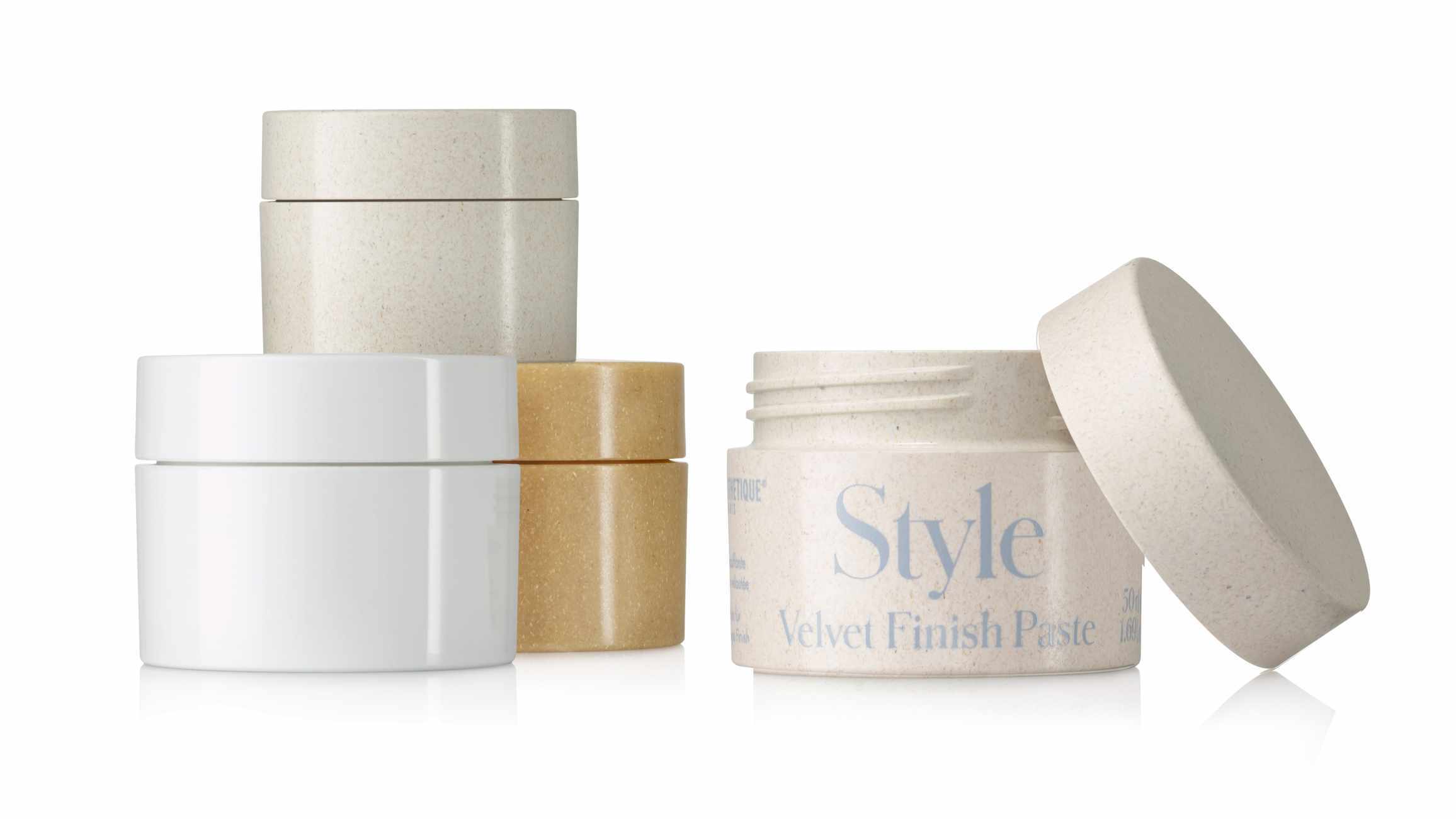
ALPLA has applied the same principle to premium cosmetics packaging. Working with German haircare brand La Biosthétique, ALPLA developed a jar, closure, and liner made entirely from bio-based material for the brand's vegan Velvet Finish Paste styling cream. The complete system cuts emissions by more than half compared to a conventional polypropylene equivalent, and the underlying production technology is already mature enough to scale from limited runs to tens of thousands of units. In a survey of 70 professional stylists who tested the packaging, most said they would pay more for it, suggesting that a bio-based format doesn’t require compromising on the look, feel, or performance a premium product needs.
These examples demonstrate that bio-based plastics can deliver excellent performance while supporting recycling within a circular economy. Material innovation, recyclability, and consumer acceptance are complementary, not competing.
Where Bio-Based Fits in a Circular Economy
Bio-based plastics are sometimes positioned as an alternative to the circular economy. Some view them as a way of solving the plastic problem by replacing fossil feedstocks with renewable ones, regardless of what happens at end-of-life. America’s Plastic Makers take the view that bio-based plastics shouldn't substitute circular economy goals, but should support and integrate with them instead.
Their principles advocate for bio-based plastics policies that support mechanical, advanced, and organics recycling capabilities, and call for both recycled and bio-based plastics to be counted as potential contributors toward a circular economy. The goal they describe is a circular plastics economy where bio-based content and recyclability work together. Switching from a fossil feedstock to a sugarcane residue feedstock shouldn’t come at the cost of the material’s ability to be recovered, recycled, and returned to productive use.
The BIOGENA eco-can is a working model of that approach. The feedstock is renewable and the can is recyclable in the HDPE stream. The CO₂ savings are independently measurable. None of those properties conflict with one another, and that’s the point.
ALPLA applies the same bio-based feedstock in different ways depending on the intended end use. The eco-can and Velvet Finish Paste jar are designed for mechanical recycling within the HDPE stream, while the company's Blue Circle Coffee Capsules are made entirely from renewable, bio-based materials and are TÜV-certified OK Home Compostable. Rather than entering a recycling stream, the capsules break down naturally at home after use. Same renewable origin, two distinct end-of-life pathways, chosen by design.
Bio-based plastics are not a replacement for recycling, for design-for-recyclability, or for the infrastructure investments that a genuinely circular plastics economy requires. They are one part of a larger toolkit. When they’re deployed with clarity about what they are and rigorous certification of what they deliver, they help make the vision for plastic circularity become reality.