
Skip to content

From Collection to Conversion: Why U.S. Infrastructure Determines Recycling Success

Recycling is often treated like a test of personal responsibility. Were the materials rinsed? Did the lid come off? Did the right bin get used? These questions are common, yet they overlook a larger truth.

Recycling works or fails because of infrastructure. The systems behind the scenes determine whether discarded materials become new products or landfill-bound waste. From the moment something is tossed into a bin to the point it becomes feedstock for a new package, recycling depends on collection, sorting, and conversion working together.

When even one part of this system breaks down, circularity grinds to a halt. That’s the challenge facing U.S. recycling today.
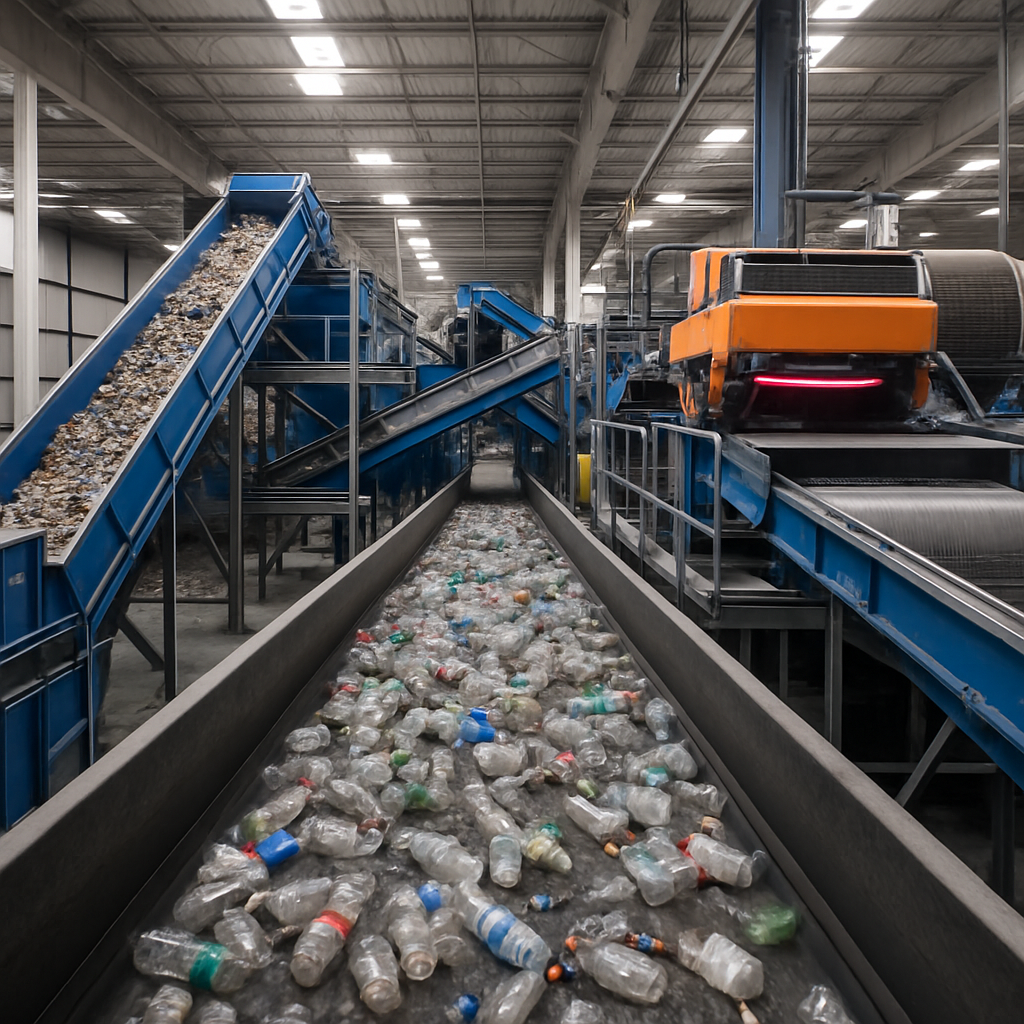
Recycling Is a System, Not a Single Action

Effective recycling requires three essential stages to work in sync:

  • Collection: Are materials being captured consistently across programs?

  • Sorting: Can facilities accurately separate plastics by type, color, and quality?

  • Conversion: Is there infrastructure to turn recovered materials into new products?

In the U.S., each of these areas faces real gaps. The issue is that recycling systems have not kept up with the complexity of materials or the demands of circularity.

When supported by the right infrastructure, plastic remains one of the most efficient and versatile materials for circular packaging systems. Its lightweight nature, durability, and adaptability make it well suited for reuse and recycling when systems are designed to recover its value rather than lose it.

Collection: The First Bottleneck

The United States has a highly fragmented approach to recycling. Thousands of municipalities manage their own collection systems with different rules, accepted materials, bin colors, and contamination thresholds.

This lack of consistency leads to two major issues. First, it creates confusion for consumers, which increases contamination and reduces the value of recyclable materials. Second, it limits access. Many rural or under-resourced communities do not have reliable recycling programs at all.

A more aligned, universal approach could significantly improve outcomes. Research from policy institutions and pilot programs in high-performing regions shows that standardized collection rules and broader access, not perfect consumer behavior, drive higher capture rates and cleaner material streams. The U.S. has the opportunity to move in that direction.

Sorting: Where Technology Makes or Breaks Value

Once collected, materials are sent to Materials Recovery Facilities (MRFs), where they’re sorted for processing. For plastics, this is where things often fall apart.

Modern packaging formats require advanced sorting technologies like optical scanners, near-infrared sensors, robotics, and AI to correctly identify and separate materials. University research labs, startup innovators, and MRF technology providers are actively developing these tools, from AI-enabled robotic sorters to enhanced polymer identification systems. However, many MRFs in the U.S. still operate with outdated systems built for simpler waste streams.

The result is a loss of value. Contamination remains high, good materials get downcycled, and many recyclable plastics are rejected entirely. These outcomes are not only environmentally costly but also economically inefficient.

Upgrading sorting capabilities makes it easier for brands and manufacturers to access the high-quality recycled content they need to meet regulatory requirements and sustainability goals.

Conversion: The Missing Link

Even when plastics are collected and sorted properly, many still don’t reach a second life. That’s because the U.S. has limited domestic capacity to convert sorted plastic into usable material.

For years, the U.S. exported plastic waste, avoiding the need to build in-country processing infrastructure. When those markets closed, it exposed a critical gap. Today, domestic mechanical recycling is underbuilt, and advanced recycling methods like chemical and enzymatic processes are still scaling.

Across the country, engineers, chemists, and materials scientists, many based at universities and national labs, are working to improve recycling yields, reduce energy intensity, and expand the range of plastics that can be recovered. These innovations are promising, but they require sustained investment, transparency, and policy alignment to move from pilot to impact.

Plastics can only be part of a circular system when there is local infrastructure to support their reuse. The future of recycling depends on expanding that capacity in ways that are energy-efficient, accessible, and transparent.

The Data Deficit

Effective infrastructure needs accurate, consistent data to evolve. Right now, that data is missing.

According to the EPA, 88 percent of U.S. states and territories do not track the types of single-use plastics currently in commerce. Many do not collect recycling data annually, cannot monitor contamination rates, and lack protocols for tracking materials through the system.

Researchers and policy analysts consistently point to this data gap as a major barrier to smarter investment and system design. Without standardized metrics, it becomes difficult to compare outcomes, identify bottlenecks, or scale what works.

Public Trust Depends on System Performance

Recycling also relies on public trust. A 2025 WM report found that many Americans, particularly Baby Boomers, lack confidence that what they place in the recycling bin actually gets recycled.

This skepticism weakens participation, even among those who want to recycle correctly. The good news is that interest in learning remains high.

When infrastructure improves and performance becomes visible through clearer labeling, better data, and consistent outcomes, public confidence tends to follow. Trust is built when systems work.

What Manufacturers and Brands Can Do

Industry has a central role to play in driving system-wide improvement. Brands and packaging producers can:

  • Design for recyclability: Use mono-materials, eliminate problematic additives, and align packaging with recovery systems.

  • Support standardized labeling: Advocate for consistent messaging that helps consumers sort correctly and boosts public trust.

  • Invest in traceability tools: Smart packaging, digital product passports, and AI can help track materials through the recycling journey.

  • Collaborate on infrastructure: Join coalitions and partnerships that fund upgrades to MRFs, collection programs, and conversion facilities.

  • Back strong policy: Encourage harmonized EPR frameworks and public investments in data systems and reprocessing capacity.

These actions go beyond compliance. They help create the infrastructure needed for truly circular packaging systems.

Building a Stronger System for the Future

Recycling has long been symbolized by a bin. In 2026, it should be seen as a system.

Where infrastructure is strong, materials are recovered. Where systems are weak, even motivated communities fall short. Designing packaging for recovery, modernizing facilities, increasing conversion capacity, and investing in better data will create a system that performs more consistently. These steps support circularity and reduce waste, helping plastic materials live longer, more useful lives.

When plastic is designed, collected, sorted, and reprocessed within a strong domestic system, it can remain a valuable material in a circular economy rather than becoming waste. Progress will come from building smarter systems, not from asking people to work harder with the tools they have.


Leave a Comment