
Skip to content

What New Research Reveals About rHDPE’s  Environmental Benefits

The case for recycled HDPE is getting more precise. New calculations from ALPLArecycling’s São José dos Pinhais facility in Brazil put the product carbon footprint of its recycled high-density polyethylene (rHDPE) at 0.34 pounds of CO₂ equivalent per pound of material. That is approximately 86% lower than the 2.4 pounds of CO₂e associated with each pound of virgin high-density polyethylene (HDPE).

The finding adds to a growing body of independent research demonstrating the environmental benefits of rHDPE. What makes this calculation especially useful is its specificity. Because it reflects the actual energy mix, processes, inputs, and operating conditions at a single facility, it gives companies a more accurate basis for evaluating recycled content and tracking environmental performance.
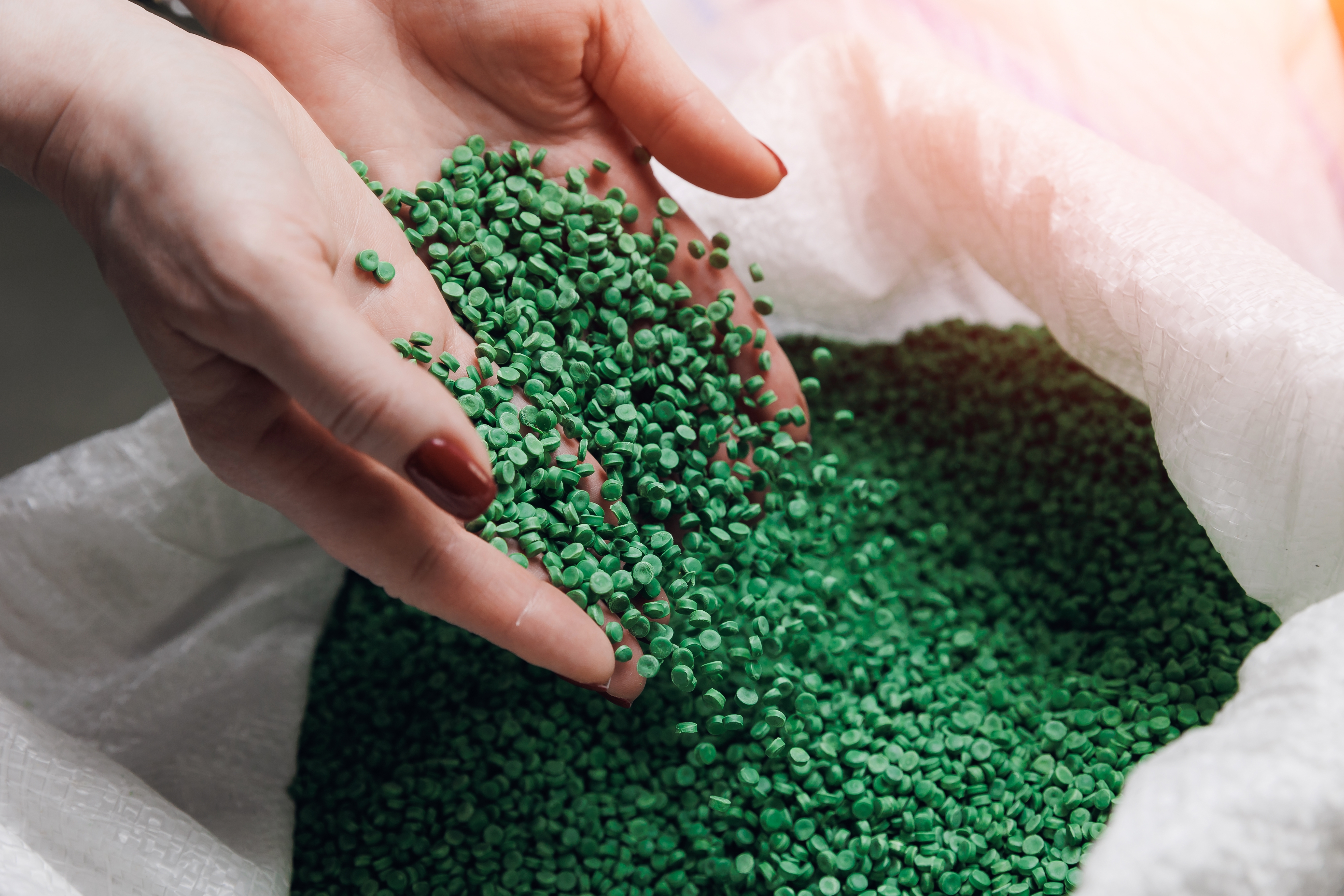
HDPE, rHDPE, and Why We Need to Measure Their Impact

High-density polyethylene is one of the most common plastics in everyday packaging. Milk jugs, detergent bottles, shampoo containers, and many household cleaning products are made from it. It’s durable, lightweight, resistant to moisture and many chemicals, and it’s one of the most widely accepted materials in curbside recycling programs. Most recycling bins that accept plastic accept HDPE, typically identified by the number 2 resin code.

When used HDPE packaging is reprocessed into new raw material, the output is rHDPE. That material can then replace a portion of virgin HDPE in new products, helping keep existing plastic in circulation for longer.

That circularity benefit is important, but it also needs to be measured. Comparing the environmental performance of rHDPE with virgin HDPE helps quantify how much recycled content can reduce emissions and gives companies more credible data for packaging decisions.

What a Product Carbon Footprint Actually Tells You

One way to assess materials is by evaluating their product carbon footprint (PCF). PCF is a measurement of the total greenhouse gas emissions associated with a material or product across a defined life-cycle boundary, expressed as a CO₂ equivalent (CO2e). CO₂e converts all greenhouse gases (including methane and nitrous oxide, which have different warming potentials) into a single comparable number based on their relative climate impact to CO2.

When ALPLA, in collaboration with c7-consult, calculates a PCF for rHDPE, it accounts for everything involved in producing that material: collecting the post-consumer plastic, transporting it to the facility, sorting and cleaning it, and processing it into new resin pellets through washing, grinding, and pelletizing. The energy consumed at every step and the carbon intensity of that energy go into the calculation.

The resulting figure of 0.34 pounds of CO₂e per pound means that for every pound of rHDPE produced at ALPLA Recycling Brazil, approximately 0.34 pounds of greenhouse gas emissions are generated. Virgin HDPE, by comparison, generates roughly 2.4 pounds of emissions per pound produced due to the energy required to extract and refine petroleum and manufacture the resin from scratch.

The 86% figure represents the gap between those two numbers, expressed as a percentage reduction. In practical terms, a brand that replaces one pound of virgin HDPE with rHDPE from this facility avoids roughly 2 pounds of CO₂e emissions.

Why Site-Specific Data Matters

Widely used lifecycle assessment databases like Ecoinvent provide industry-average emission factors for materials including HDPE. These averages are useful for initial comparisons, but they’re exactly that: averages. They’re compiled from data from many facilities, geographies, and energy sources, which means no single facility’s actual footprint is likely to match the average exactly.

That’s why we also need site-specific data from real facilities. It accounts for the real-world factors that determine performance: the energy mix powering the plant, the efficiency of its cleaning and pelletizing process, the composition and sourcing of its input material, and the transportation distances involved in collecting post-consumer plastic.

This is the first time a site-specific emission factor has been determined for rHDPE produced in Brazil. Brazil’s energy grid relies heavily on hydroelectric power and is significantly less carbon-intensive than the European average, contributing to the result of 0.34 pounds of CO₂e per pound. A facility running on coal-heavy electricity would show a higher number. Since the São José dos Pinhais facility draws on a cleaner grid, it shows a lower one. The site-specific figure is more precise, more defensible, and more useful to customers making sourcing decisions or completing environmental reporting.

A Track Record Across Multiple Facilities

The Brazil assessment is the latest in a series of site-specific rHDPE measurements ALPLA has done.

  • The Montcada i Reixac facility produced rHDPE with a PCF of 0.24 pounds of CO₂e per pound of material, which is 88% fewer emissions than virgin HDPE.
  • The Venta de Baños facility came in at 0.28 pounds of CO₂e per pound, representing an 85% reduction.
  • Updated calculations for ALPLArecycling’s Wöllersdorf, Austria, facility found a weighted PCF of 0.44 pounds of CO₂e per pound of rHDPE, an 81% reduction compared with virgin material.

Across Spain, Austria, and Brazil, the results show carbon-footprint reductions ranging from 81% to 88% compared with virgin HDPE. While the variation reflects differences in facility design, processing efficiency, and local energy infrastructure, the consistency of the direction is what matters. Every independent, site-specific calculation finds rHDPE to be dramatically less carbon-intensive than its virgin equivalent.

It shows that the environmental benefit of rHDPE isn’t based solely on favorable conditions at one facility. It holds across different geographies, energy grids, and processing configurations.

What the Independent Research Confirms

ALPLA’s calculations are consistent with independent research. The Franklin Associates Life Cycle Impacts study, one of the most widely cited analyses in this space, found that recycled HDPE produces approximately 70% lower cradle-to-gate carbon emissions than virgin HDPE, with each pound of rHDPE avoiding roughly 1.3 pounds of CO₂e compared with virgin resin.

The Franklin Associates figure is lower than ALPLA’s facility-specific results, highlighting the variance between a generalized industry average and measurements taken at specific, well-optimized facilities. Still, both confirm that rHDPE is substantially less carbon-intensive than virgin material under virtually any reasonable set of assumptions.

Why Transparency Is Part of the Benefit

Publishing site-specific PCF data helps the industry as a whole make better decisions. When brands evaluate recycled content options, they need credible numbers to build into their own emissions calculations, procurement criteria, and product-level sustainability assessments. Generic averages give them a starting point, but site-specific data gives them something they can actually use.

Regular measurement also creates opportunities for improvement. By calculating PCFs over a period of time, you can build a performance record that shows whether your footprint is improving as the energy grid decarbonizes, processes become more efficient, and input material quality improves. That creates accountability and reveals where further gains are possible.

The 86% figure from Brazil is significant on its own. What makes it more significant is that it aligns with verified results from Spain and Austria, and that all of them will be updated again. Having a commitment to repeated, transparent, site-specific measurement is what converts a compelling statistic into a credible environmental case.

Leave a Comment